
“Touji” in 2023 is December 21 or 22.
According to the calendar system, the zodiac signs of the year change at the winter solstice. In other words, the winter solstice is the beginning of the 24 solar terms. According to the Jikki method, the Winter Solstice falls on December 22, when the solar longitude is 270 degrees. The 15-day period from this day is known as “Touji”.
During this period, the time from sunrise to sunset is the shortest in the northern hemisphere. This means that the daylight hours are at their shortest, and since it is the day when the sun’s power is at its weakest, it has been considered the “day closest to death”. However, it has also been recognized as a turning point toward good fortune, as it is the day when the sun is at its weakest.
Traditional custom (風習)
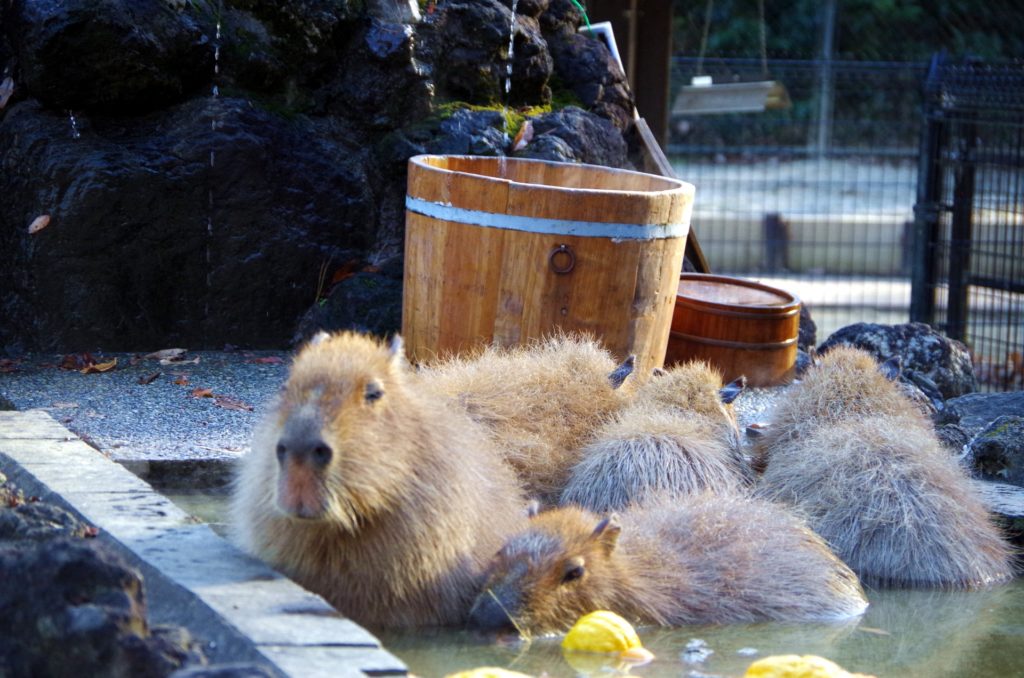
The custom of soaking in a yuzu bath means “misogi”. Since “Touji” is the climax of the “Yinki”(Bad luck), soaking in a yuzu bath to purify the body and pray for good luck in the coming days is the meaning of this custom. It is also called “Ichiyou raifuku” (meaning blessing good luck and happiness).
In terms of food, there is a custom of eating pumpkins and other foods with word ending in “n”. The custom of eating “kabocha”(pumpkins) dates back to the Edo period (1603-1867). Originally a summer vegetable, “kabocha” was considered good luck because it could be stored for a long time and could provide abundant nutrition even in winter. As for foods with “n”, the seven winter herbs are representative. “Renkon”(Lotus), “Ninjin”(carrot), Ginnan”(Ginko nuts), “Kinkan”(kumquat), “udon”(Noodle), etc. all have “n” at the end. It is thought to bring luck, meaning that luck will arrive.
There is also the custom of eating “Toujigayu” porridge (azuki porridge).
Incidentally, “Touji” is also considered important in other countries. In China, it is also considered as the beginning of the year, and there is a custom to eat dumplings in the north and “yuen” (a dessert made from rice) in the south. “Touji” festivals are also held in many parts of the world.
Seventy Two Appearances (七十二候)
The 24 seasons each divide three seasons and further express the subtle changes in seasons. These are referred to as the “72 appearances” and were commonly used, especially in agriculture, in ancient Japan and China.
初候 (1st 5days) (Japan)乃東生 Summer wilting grass (Eustoma grandiflorum) sprouts.
(China)蚯蚓結 Earthworms clump together in the ground.
次候 (2nd 5days) (Japan・China)麋角解 Moose loses its antlers.
末候 (Last 5days) (Japan)雪下出麦 Wheat sprouts under the snow.
(China)水泉動 Frozen spring in the ground begins to move.

Video (動画)


コメント