“Shousetsu” in 2023 is on November 22 or 23.
According to the fixed-air method, this is when the solar longitude is 240 degrees. According to the equilibrium method, it will be on November 22, approximately 334.81 days after the winter solstice. From there, about 15 days will be known as “Shousetsu”.
Although the word “snow” has been used, it is not yet the beginning of the season, and the autumn leaves will begin to fall. According to the Japan Meteorological Agency, “light snow” means less than 1mm of snow even if it continues to fall for several hours.
The “Shousetsu” in the “Koyomi Bunkan” (Calendar Handbook) explains as “It is cold, so the rain also becomes snow”.
Traditional custom (風習)
Every year on November 23, the Niinamesai Ceremony is held. The Niinamesai Ceremony is regarded by the Imperial Household as the most important of the annual court ceremonies. The history of this ceremony is long, and it is recorded in the “Kojiki” (Records of Ancient Matters) that “Amaterasu”(Ancient Goddess) performed this ceremony during the mythological period. The content of the ceremony is to thank the gods for the year’s harvest by offering the first grains of the year to the gods. It is an event appropriate to Japan’s agrarian culture.
It is said that “Kinro Kansha no Hi” (Labor Thanksgiving Day) on November 23 (a national holiday) is derived from the Niinamesai Festival. In Japan, where diligence can be said to be the culture, we can see that labor and harvest are deeply connected.
At this time of the year, the weather become warm and spring-like when the area is covered by a migratory high-pressure system. This sunny weather is called “Koharu-Biyori”. Sometimes, mistaking it for spring, cherry blossoms and dandelions bloom, and are called “Kaeribana”(return flowers),”Wasurebana”(forgotten flowers), or “Kuruibana”(crazy flowers).
Seventy Two Appearances (七十二候)
The 24 seasons each divide three seasons and further express the subtle changes in seasons. These are referred to as the “72 appearances” and were commonly used, especially in agriculture, in ancient Japan and China.
初候 (1st 5days) (Japan・China)虹蔵不見 You’ll never see a rainbow again.
次候 (2nd 5days) (Japan) 朔風払葉 North winds brush away the leaves from the trees.
(China) 天気上騰地気下降 Heaven and earth’s temperatures are reversed.
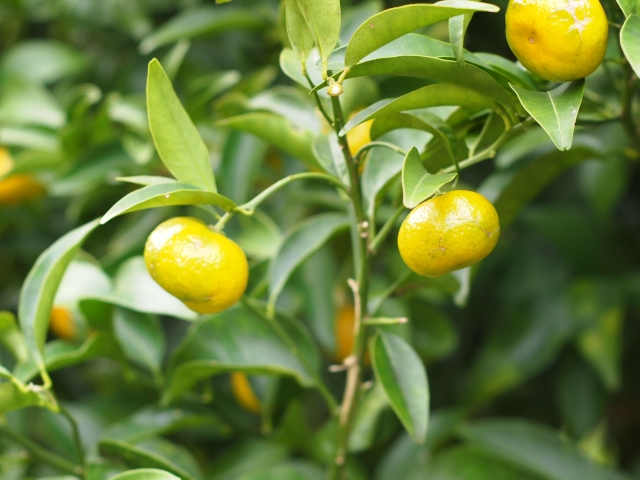
末候 (Last 5days) (Japan) 橘始黄 “Tachibana” (citrus) fruits begin to turn yellow.
(China) 閉塞而成冬 Atmosphere of heaven and earth is blocked up and winter sets in.

コメント