“Hakuro” in 2023 is on September 7 or 8.
According to the fixed-air method, it will be when the solar longitude is 165 degrees. According to the equilibrium method, it will be around September 6, approximately 258.71 days after the winter solstice. From there, about 15 days are known as “Hakuro”.
“Hakuro” is read as “Hakuro” or “Shiratsuyu”. It means the time when dew begins to appear on flowers and trees in the morning. The “Koyomi handbook” of the Edo period says, “Yin-ki” (Gloom) finally overlaps with cold (yin-ki), and the temperature drops, causing morning dew to form on plants and trees, which then shine white in the morning haze.
In China, where the 24 seasons were born, the color of autumn is considered to be white. The name “Hakuro” period refers to the period in which the poet “Kitahara Hakushu” was active.
The word “dew” is separately called “Tsuki no Shizuku”(drops of the moon). The many drops of dew falling from the grass and other plants are called “Tsuyu Shigure”(dew drizzles).

Traditional custom (風習)
September 9 is “Chou-you,” one of the five seasonal festivals. (Five Seasonal Festivals: January 7 (Jinnichi), March 3 (Joushi), May 5 (Tango), July 7 (Tanabata), and September 9 (Chou-you)).
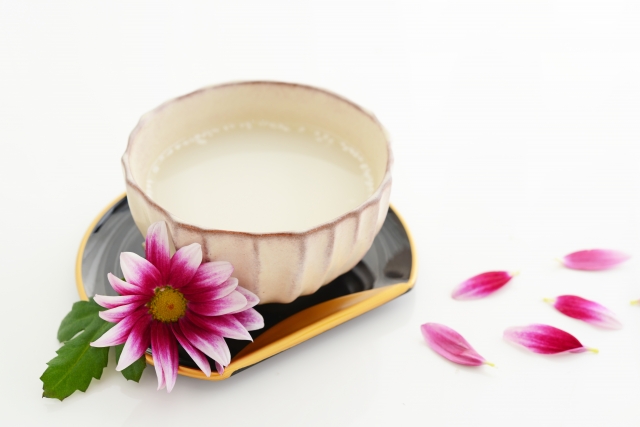
“Chou-you-no-Sekku” is also known as Chrysanthemum or Chestnut Festival, and people pray for longevity and good health by drinking chrysanthemum wine and eating chestnut rice during this period. In China, September 9 is considered a special day because it is the day on which 9, the highest of the “You su” (odd numbers), overlaps. The number 9 is also the symbol of the Chinese emperor.
The Mid-Autumn Moon is the moon visible on the night of August 15 in the lunar calendar. This year, Mid-Autumn is on September 10. It is an ancient custom to eat dumplings while admiring the moon.
September 11 is one of the miscellaneous days of the year, called “Nihyaku Niju nichi”(two hundred twenty days). It has been regarded as one of the three bad days for farmers because of typhoons and stormy weather. It is considered to be a time to be on the lookout for damage to crops that are about to be harvested.
September 20 is the first day of the equinoxes. As the saying goes, “Hot and cold last until the equinoxes,” it is a day when one can feel the sense of the season that is appropriate for the Japanese season.
Seventy Two Appearances (七十二候)
The 24 seasons each divide three seasons and further express the subtle changes in seasons. These are referred to as the “72 appearances” and were commonly used, especially in agriculture, in ancient Japan and China.
初候 (1st 5days)(Japan)草露白 The dew on the grass glistens white.
(China)鴻雁来 Geese begin to fly in.
次候 (2nd 5days) (Japan)鶺鴒鳴 The wagtails begin to sing.
(China)玄鳥帰 Swallows return to the south.
末候 (Last 5days) (Japan)玄鳥去 Swallows return to the south.
(China)羣鳥養羞 Many birds store food.


コメント