One of the calendars is the solar calendar, which defines a year as 365 or 366 days. The other one used in China is the lunar calendar, which is based on the movements of the moon. Both of these calendars have some deviations from the actual changing of seasons. The solar calendar has a slight deviation due to the adjustment made by leap year, while the lunar calendar has a significant deviation. However, this is not a big concern for Japanese people as they are not familiar with it.
The 24 solar terms were created during the Warring States period in China because the difference in seasons was important for certain occupations, especially in agriculture. Therefore, it was necessary to create a calendar to correct the seasonal shift.
So, two methods were taken.
The first one is the ‘Heiki Method’, which divides the solar year into 24 parts by the number of days.
The other one is the ‘Teiki Method’, which divides the solar year into 24 parts based on the sun’s positional motion.
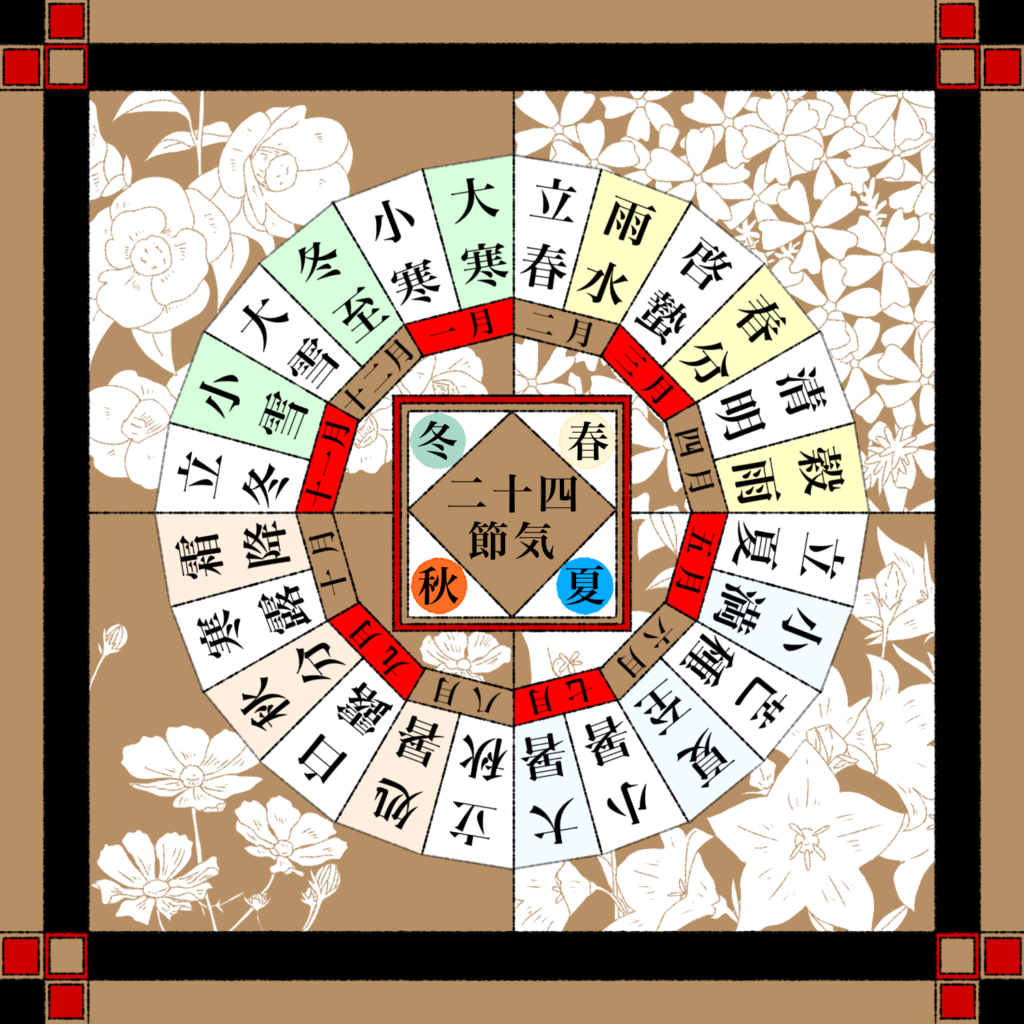
Then, the year was divided into 12 “Sekki” and 12 “Chuki”, and names were given according to the seasons.
The commonly heard terms such as “Risshun”, “Rikka”, “Rissho”, and “Rittou” are classified as “Sekki” and are referred to as “Shiryuu”.
Furthermore, the “Chuki” classification such as “Midsummer” and “Midwinter” is referred to as “Nishi”, and “Vernal Equinox” and “Autumnal Equinox” is referred to as “Nibun”.
All of these are also collectively referred to as “Hassetsu”.
Each Sekki consists of a period of approximately 15 days, meaning, for example, in 2022, Rikka is from around May 5th to around May 20th.
And that 15-day period can be divided into approximately 5-day segments, with the first 5 days referred to as “Sho-Kou”, the middle 5 days referred to as “Ji-Kou”, and the last 5 days referred to as “Matsu-Kou” (referred to as “Nanajuuni-Kou” as it is divided into 72).
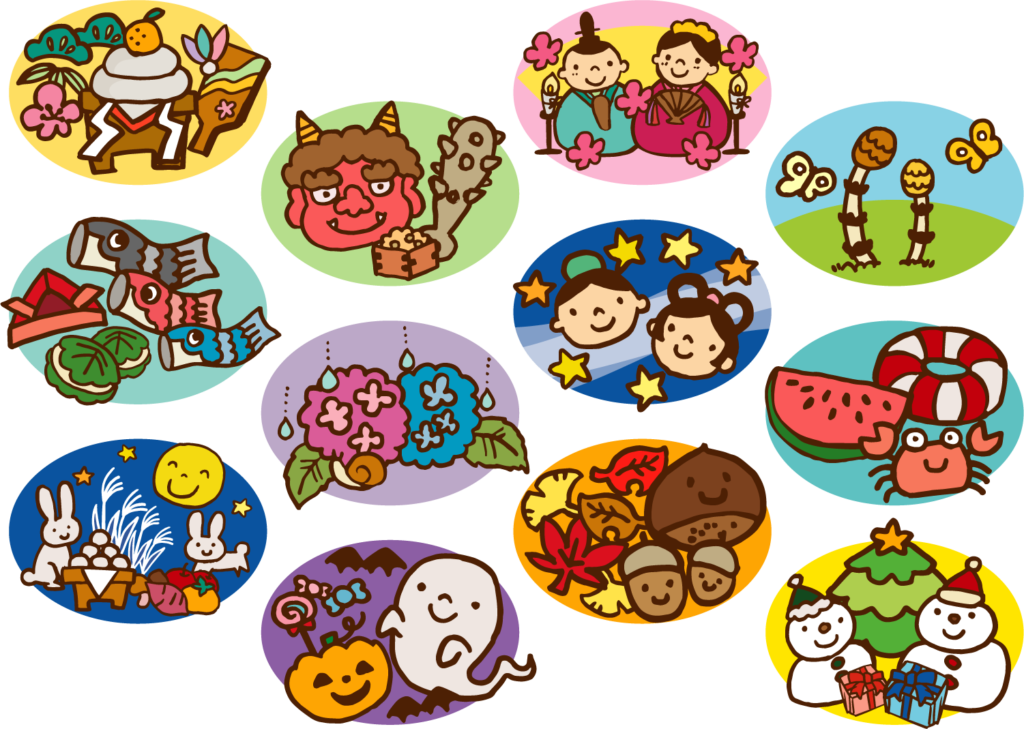
Twenty-four solar terms can cause slight differences in dates each year due to the calculation method. But even so, it’s truly amazing that we can still feel the subtle changes in the seasons. By the way, there may be slight differences in the names and the feeling of the seasons. For example, “Daishu (means very hot)” is around July 22nd, but in Japan, it really starts to get hot in mid-August. This is because the 24 solar terms originated from China (although they have been slightly modified in Japan). Despite that, the feeling of the seasons has been cultivated over a long history in Japan, so many seasonal words used in “haiku (Traditional Japanese poetry” and poetry are based on the 24 solar terms.
It’s wonderful to be able to enjoy the changing seasons in Japan.